
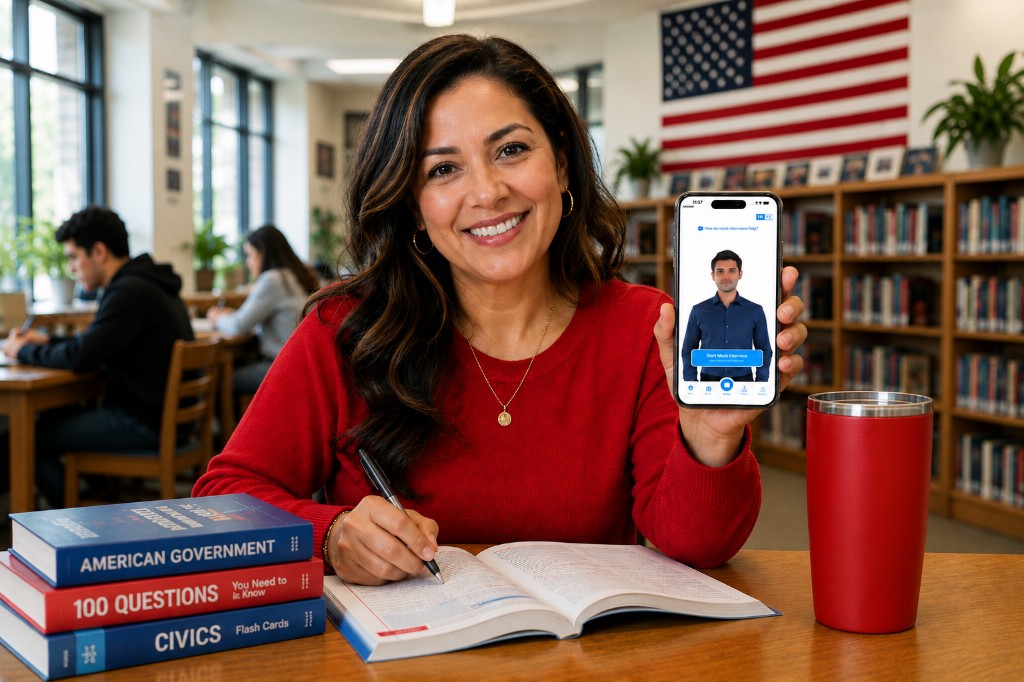
You cannot take the full U.S. citizenship test in Spanish. However, if you qualify for the 50/20 or 55/15 English language exemption, you may take the civics portion in Spanish through an interpreter you provide. Here is how it works and who qualifies.
What the Citizenship Test Includes
The citizenship test has two main parts: an English language assessment (reading, writing, and speaking) and a civics test (U.S. government and history). Most applicants must complete both parts in English. There is no general option to take the entire test in Spanish or any other language.
Who Can Take the Civics Test in Spanish?
USCIS grants English language exemptions based on your age and time as a lawful permanent resident (green card holder). If you meet one of these rules at the time you file your N-400, you skip the English portion and may take only the civics test in your native language, including Spanish:
- 50/20 rule: You are 50 or older and have been a permanent resident for at least 20 years.
- 55/15 rule: You are 55 or older and have been a permanent resident for at least 15 years.
Under either exemption, you are still required to pass the civics test, but you can answer in Spanish (or any other native language) with the help of an interpreter.
The 65/20 Rule: Fewer Questions to Study
If you are 65 or older and have been a permanent resident for at least 20 years, you qualify for special consideration on the civics test. Under the 65/20 rule, you are exempt from the English requirement (like the 50/20 and 55/15 rules), and you also study a shorter list of only 20 designated civics questions. The officer asks up to 10 from that list, and you need 6 correct to pass.
You Must Bring Your Own Interpreter
If you qualify for an English exemption and plan to take the civics test in Spanish, you are responsible for bringing your own interpreter. USCIS does not provide one. Your interpreter must be fluent in both English and Spanish, but does not need to be a professional translator. A family member or friend who speaks both languages fluently can serve as your interpreter.
Can a Disability Waiver Help?
If a physical, developmental, or mental impairment prevents you from meeting the English or civics requirements, you may qualify for a separate exemption through Form N-648 (Medical Certification for Disability Exceptions). This is different from the age-based language exemptions and can waive the English test, the civics test, or both, depending on your situation.
What If I Don't Qualify for an Exemption?
If you do not meet the 50/20, 55/15, or 65/20 age and residency requirements, you must take the citizenship test in English. The English portion tests basic reading, writing, and speaking ability. It is not an advanced English exam. Studying with practice materials designed for non-native speakers can help you build the skills you need.
How to Prepare in Spanish
Whether you qualify for an English exemption or need to study for the full test, preparing in your native language first can make the material easier to understand. Citizenry supports 20 languages, including Spanish, so you can study civics questions and practice mock interviews in Spanish or English. If you qualify for an exemption, you can focus entirely on the civics content in Spanish. If you need to take the full test, you can start studying in Spanish to learn the material and then practice in English to prepare for the interview.
Related Articles
- How Can I Take the Citizenship Test in My Language?
- Citizenship Test Exemptions: 50/20, 55/15, 65/20 and N-648
- How Hard Is the Citizenship Test If My English Is Not Very Good?

Ready to Start Practicing?
Download Citizenry and start your path to citizenship today.